Destinations

Places with stories worth hearing

Each guide is adapted from a LoreLens audio narration — the same stories the app tells you on location, in article form for your planning.
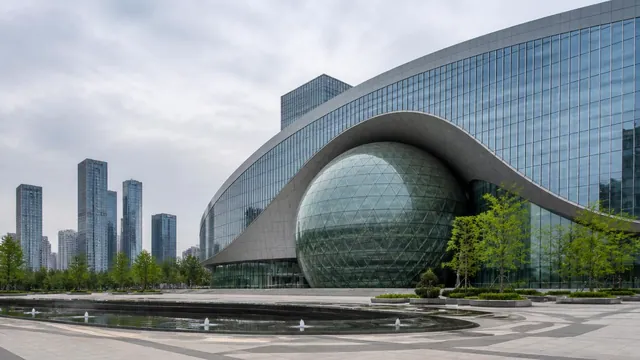
Shanghai Science and Technology Museum: The Building Is the Constant

Shanghai

Shanghai Science and Technology Museum: The Building Is the Constant

Twenty-one heads of government used this building before the first ticket-holder did. Then it was emptied for nearly three years and reopened in February 2026 with different contents. The name now covers three buildings in three parts of the city.

11 min read

Shanghai Wild Animal Park: The Cage Around the Visitor

Shanghai

Shanghai Wild Animal Park: The Cage Around the Visitor

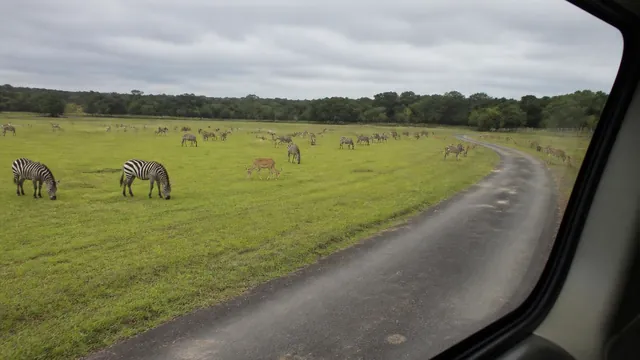
A drive-through park inverts the nineteenth-century zoo: the barrier travels with you instead of standing around the animal. Take the bars away, though, and being seen at all becomes the problem — and this park's answer, printed on its own schedule boards, is food, on a timetable of more than ninety named items.

11 min read

Zhenjiang's Three Hills: One Swallowed by a Temple, One Still an Island, One a Balcony for a Poet

Jiangsu · Zhenjiang

Zhenjiang's Three Hills: One Swallowed by a Temple, One Still an Island, One a Balcony for a Poet

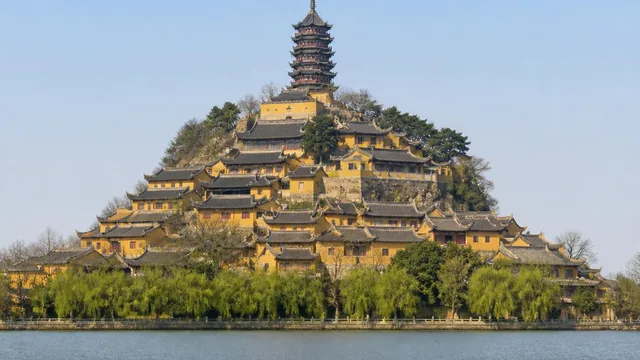
Three low hills strung along a few kilometres of the lower Yangtze at Zhenjiang, sharing one 5A listing. One of them stopped being an island in the nineteenth century, one never did, and the third holds an iron pagoda with four of its seven storeys left and a relic chamber nobody knew about until 1960.

12 min read

Mount Mao: The First Blessed Land, a Hermit Who Advised an Emperor by Post, and a Monument That Answers Firecrackers with a Bugle

Jiangsu · Zhenjiang

Mount Mao: The First Blessed Land, a Hermit Who Advised an Emperor by Post, and a Monument That Answers Firecrackers with a Bugle

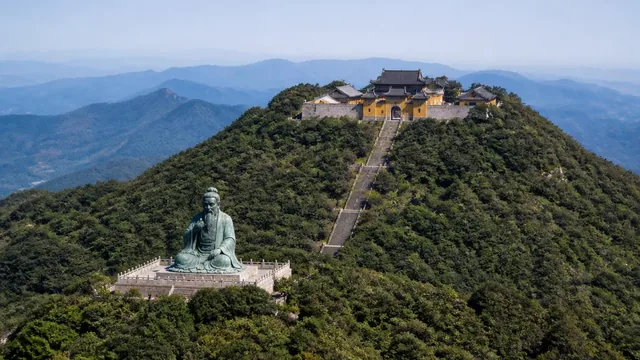
A 372-metre ridge straddling the Zhenjiang–Changzhou boundary — the western slope administered from Jurong, the eastern from Jintan — that Daoism ranks as the first of its seventy-two blessed lands, that a sixth-century recluse turned into a school still named after it, and that now draws a million and a half visitors a year to a war memorial with a documented acoustic anomaly.

12 min read

The Grand Buddha at Lingshan: 700 Tonnes of Bronze, Thirty Kilometres of Welding, and a Fog That Lifted on Cue

Jiangsu · Wuxi

The Grand Buddha at Lingshan: 700 Tonnes of Bronze, Thirty Kilometres of Welding, and a Fog That Lifted on Cue

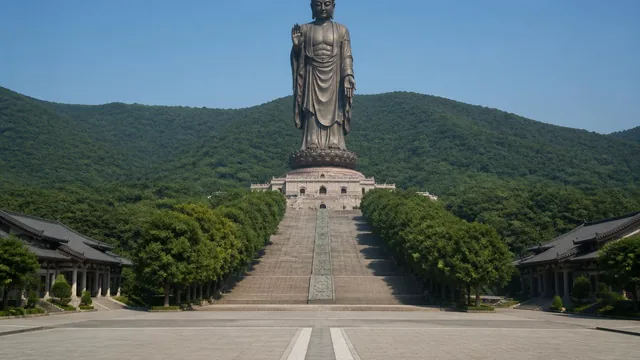
An 88-metre standing Buddha on the shore of Lake Tai, assembled from 1,560 bronze plates on a hill that Xuanzang is said to have named on his way home from India. It is the youngest object in this guide and one of the most deliberately engineered — down to the number of steps you climb to reach it.

12 min read

Yuantouzhu: A Banker's Orchard, a Poet's Advertising Slogan, and Thirty Thousand Cherry Trees Somebody Brought Back From Japan

Jiangsu · Wuxi

Yuantouzhu: A Banker's Orchard, a Poet's Advertising Slogan, and Thirty Thousand Cherry Trees Somebody Brought Back From Japan

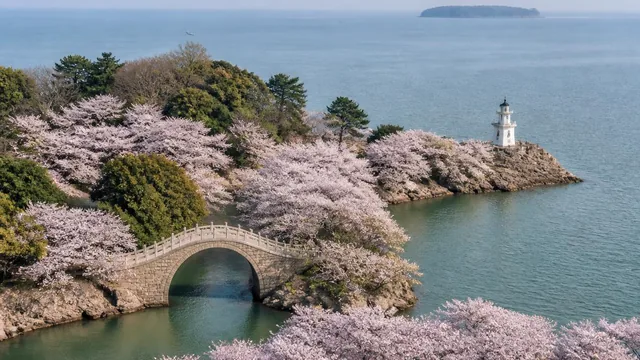
A peninsula on the northwest shore of Lake Tai that a Bank of China manager began buying up around 1916, that a ring of Republican-era industrialists filled with private villas, and that now runs on a six-character line written by Guo Moruo in the late 1950s — plus a cliff inscription about two ancient kingdoms and an island 2.6 kilometres out with monkeys on it.

12 min read

Huishan Ancient Town: A Hundred Ancestral Halls, the World's Second-Best Spring, and a Blind Man's Tune That Had No Name

Jiangsu · Wuxi

Huishan Ancient Town: A Hundred Ancestral Halls, the World's Second-Best Spring, and a Blind Man's Tune That Had No Name

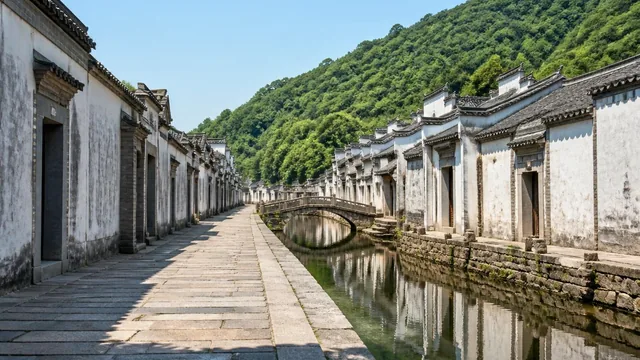
Under a third of a square kilometre at the foot of Hui Hill sit the ancestral halls of eighty Wuxi families, a Ming garden two emperors copied for their own palaces, the spring Lu Yu ranked second in the empire, and the place a street musician's most famous piece was named after — three years before anyone wrote the name down.

13 min read

Wuxi Film Studios: The Sets China Built to Film Its Own Classics, and Then Could Not Bring Itself to Demolish

Jiangsu · Wuxi

Wuxi Film Studios: The Sets China Built to Film Its Own Classics, and Then Could Not Bring Itself to Demolish

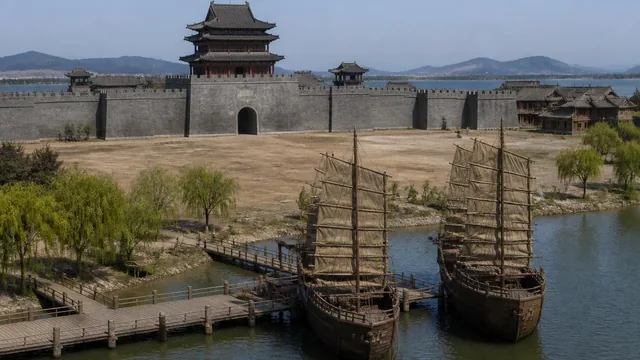
In 1987 China Central Television built an outdoor location base on the shore of Lake Tai so it could adapt the country's greatest novels. It put up a Tang palace, a Three Kingdoms fortress and a Song capital, filmed the definitive versions of Romance of the Three Kingdoms and Water Margin in them, and then discovered that the sets earned more money standing still than they ever had on camera.

12 min read

Tongli: The Garden a Disgraced Official Built, and Named After His Own Mistake

Jiangsu · Suzhou

Tongli: The Garden a Disgraced Official Built, and Named After His Own Mistake

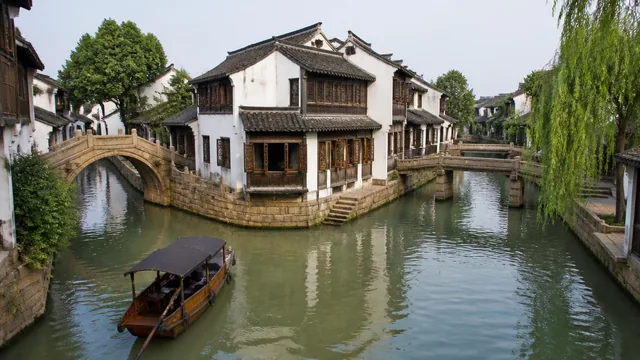
Fifteen waterways cut this Suzhou town into seven islands joined by forty-nine bridges. On one of them stands a World Heritage garden that a sacked provincial commissioner spent a hundred thousand taels of silver on, gave a name meaning to reflect on one's faults, and died the year after finishing.

12 min read

Wuzhong Lake Tai: A 5A Rating Stretched Across Three Mountains, Seven Sights and Ten Thousand Years

Jiangsu · Suzhou

Wuzhong Lake Tai: A 5A Rating Stretched Across Three Mountains, Seven Sights and Ten Thousand Years

This is not one place. It is 21.5 square kilometres of Suzhou's lakeshore holding a hall of Southern Song clay arhats, a Ming prime minister's village, a Republican merchant's 3,854 carvings, an island with ten-thousand-year-old stone tools, and the hill where tradition says Sun Tzu wrote the Art of War.

13 min read

Shajiabang, Yushan and Shanghu: The Town That Renamed Itself After an Opera

Jiangsu · Suzhou

Shajiabang, Yushan and Shanghu: The Town That Renamed Itself After an Opera

In 1964 Mao Zedong watched a Peking opera about wounded soldiers hiding in a reed marsh and suggested it be named after the fictional village where it was set. Twenty-eight years later the real township next to that marsh abolished its own name and took the opera's instead.

13 min read

Jinji Lake: A 5A Rating for a Place That Did Not Exist in 1993

Jiangsu · Suzhou

Jinji Lake: A 5A Rating for a Place That Did Not Exist in 1993

Suzhou's fourth 5A scenic area is a business district built from farmland under an agreement between two governments. It charges no admission. And 1.4 kilometres from a 301.8-metre tower the internet named after a pair of long johns runs an earth causeway a county magistrate built in 1890 so that fishermen would stop drowning.

14 min read

Showing 205–216 of 246 guides