Hebei · Tangshan
Eastern Qing Tombs: Read an Imperial Landscape
Follow Xiaoling's ceremonial axis into a mountain-ringed necropolis, then compare the tombs of Qing emperors and empress dowagers without reducing burial history to underground spectacle.
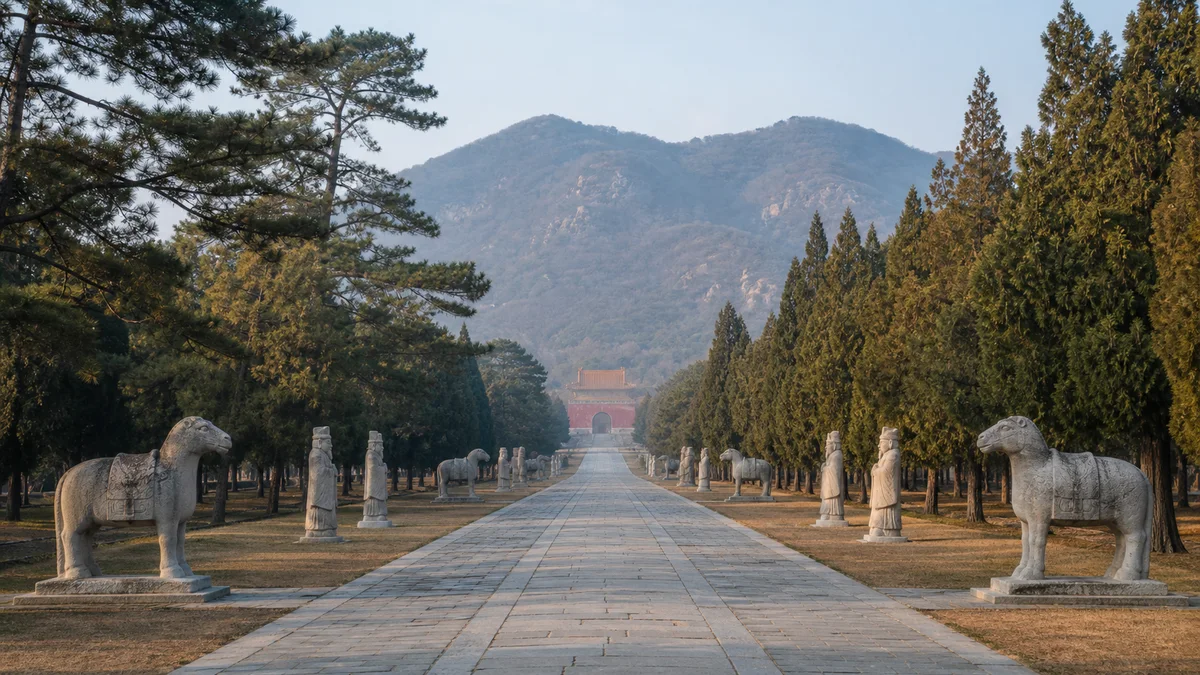
5A View location, maps and nearby scenic areasStand on the long approach to Xiaoling and look past the gates. The burial mound is not the first object offered to your eyes. Stone, bridges, trees and mountain ridges make you cross a ceremonial landscape before the tomb itself can be imagined.
That delay is the key to the Eastern Qing Tombs, or Qing Dongling, at Zunhua: separate royal burial compounds spread across valleys and joined by hierarchy, roads and Qing court geography.
Plan by clusters, not by a continuous walk. Begin with Xiaoling’s shared ceremonial approach to learn the design language. Then choose one contrasting compound—often Qianlong’s Yuling or the Dingdongling tombs associated with Empress Dowagers Ci’an and Cixi, when currently open. Distances are substantial, and a diagram that fits on one sign can conceal kilometres of transfer.
One World Heritage component, several different boundaries
The Eastern Qing Tombs form part of UNESCO’s serial property Imperial Tombs of the Ming and Qing Dynasties, which recognises royal burial architecture, ritual planning and landscape selection across multiple sites. It does not turn Zunhua’s tomb country into one museum room.
Five Qing emperors are buried here: Shunzhi, Kangxi, Qianlong, Xianfeng and Tongzhi. Separate compounds also hold empresses, empress dowagers, consorts and other imperial relatives. Their tombs vary in scale, architecture, condition and visitor access.
Keep three boundaries separate. The UNESCO component and buffer zone protect heritage values; the modern scenic area organises tourism; an individual ticket or open route covers only selected sites. On the Eastern Qing Tombs 5A profile, a map pin locates the attraction, but it cannot show every protected ridge, branch valley or operating gate.
Xiaoling set the grammar in 1661
The Shunzhi Emperor, the first Qing ruler to govern from Beijing, died in 1661. His Xiaoling established the principal layout from which the Eastern Qing necropolis grew. Later tombs did not simply copy it, but they entered a landscape already ordered by Shunzhi’s central position and the dynasty’s ancestral hierarchy.
Read Xiaoling from south to north. Monumental entrances announce separation from ordinary ground. The Sacred Way draws movement through stelae, stone figures, bridges and gates. Ceremonial halls stood before the Soul Tower and walled burial mound, where visible ritual architecture approached a deliberately hidden chamber.
The axis joined state ceremony to family lineage. Later rulers presented ancestral loyalty as legitimate government. Yet quarry workers, carpenters, earth movers, tile makers and painters built the route. An imperial afterlife required living labour.
Feng shui is visible landscape planning
The necropolis lies below protective mountains, with branch valleys and watercourses shaping the placement of individual tombs. Qing planners understood these relationships through feng shui—historical ideas about terrain, direction, water and the circulation of vital forces.
Take that system seriously without claiming that it supplies measurable supernatural protection. Ridges give enclosure and visual authority. Water and roads structure approach. Open southern views and sheltered northern slopes turn burial compounds into a legible political landscape.
Beijing’s palaces represented living rule; Chengde Mountain Resort expressed another mode of Qing power. At Zunhua, mountains carried lineage beyond death.
The Sacred Way stages attendance after death
The Sacred Way is not merely a photogenic avenue. Gates, a stele pavilion, bridges and stone statues gradually changed the visitor’s status from traveller to ritual participant. Officials and animals in stone formed an unmoving court, suggesting that imperial order continued around the dead ruler.
Look at paired figures rather than treating each as an isolated sculpture. Standing and kneeling animals create rhythm; civil and military officials express different forms of service. Weathering, replacement and repair are also part of what survives. Do not climb the statues or their bases for a portrait.
Xiaoling’s approach influenced the broader site, but each later tomb has its own branch route. The ceremonial logic is shared; the modern transport network is not. Completing one avenue does not place you within easy walking distance of every compound.
Five emperors, five different endings to power
Kangxi’s Jingling belongs to one of China’s longest-reigning emperors; Qianlong’s Yuling reflects a court at the height of resources and artistic ambition. Dingling and Huiling, built for Xianfeng and Tongzhi, came from a later Qing world under foreign pressure, internal rebellion and tighter finances.
These differences can be read without ranking tombs only by decoration. Compare the length of approach, surviving halls, stone carving, repairs and the relationship between mound and mountain. A modest or damaged compound can reveal more about a reign’s constraints than the richest chamber.
Yuling is known for Buddhist imagery and inscriptions inside its underground palace. When access is permitted, read them as Qing ritual culture—not exotic wallpaper. Tibetan Buddhist vocabulary at court had devotional, political and artistic dimensions.
Ci’an and Cixi should not become a single caricature
The paired Dingdongling compounds are associated with Empress Dowagers Ci’an and Cixi, two women who stood at the centre of late Qing court politics. Their proximity does not make their careers identical, and Cixi’s fame should not erase Ci’an or the many other women buried across the necropolis.
Cixi’s tomb is often introduced through luxury, political judgement and later looting. Its surviving decoration can indeed show unusual expense and craftsmanship. But a guide should distinguish what the architecture demonstrates from moral stories projected onto every dragon or gilded surface.
Empresses and consorts entered the burial hierarchy through court rank, family politics and reproductive expectations. They were honoured unequally in death, as in life. Read names and relationships rather than making women’s tombs an appendix to an emperor.
Looting is damage, not entertainment
Several Eastern Qing tombs were looted during the political and military disorder of the twentieth century. Objects were removed, chambers disturbed and human remains violated. The episode belongs to the site’s history, but sensational stories about secret tunnels, curses or bodies can turn real damage into entertainment.
When an underground chamber is open, distinguish original stonework, restored elements, replicas and later displays. Empty platforms and broken context are evidence of loss. They do not invite visitors to reenact robbery or pose as treasure hunters.
Conservation sometimes requires closure, controlled humidity, barriers or bans on flash and tripods. Those rules may feel restrictive, yet they answer a history in which access repeatedly outran care. A sealed door can preserve evidence as effectively as an exhibition explains it.
Build the route around distance and one priority
A useful half-day combines Xiaoling’s approach with one later tomb cluster. Choose Yuling for imperial carving and burial ritual, or Dingdongling for late Qing politics and women’s place in the hierarchy, subject to current access. A full day can compare both, but only if transfers are dependable.
Do not assume that a combined ticket guarantees every hall, underground chamber or exhibition. Shuttle buses, parking arrangements and operating compounds can change with maintenance, weather, conservation and crowd control. Confirm the day’s route at an official entrance before committing to a distant stop, and keep enough time for the last return.
The main ceremonial avenues may be relatively gentle, while compounds add thresholds, stone paving and steps; underground routes can involve steep descents. Travellers with limited mobility should ask about the exact dock or drop-off, step-free entrances, toilets and return vehicle rather than relying on a general accessibility label.
Photograph the axis, then respect where it ends
The strongest photograph is often not a close-up of gold or stone, but a relationship: a gate framing the next gate, statues leading towards a ridge, or a Soul Tower standing before the mound. A person kept at respectful distance supplies scale. Weather and foliage change the scene, so no season or empty avenue is guaranteed.
Inside halls or chambers, follow current photography notices. Keep voices low, avoid flash when prohibited, never touch carvings for balance and do not stage comic poses with coffins or funerary objects. These are archaeological and ritual spaces built around real burials.
Before leaving, look back along Xiaoling’s axis. The mountains have not protected the dynasty from collapse, theft or decay. What they preserve is more complicated: a designed claim that family order could become landscape, and evidence of how later generations damaged, studied and now protect it.
Compare this concentrated ancestral world with the Qing court’s living stage at Chengde, or with the frontier threshold of Shanhai Pass. The Western Qing Tombs offer the closest counterpart, but not a duplicate. At Eastern Qing, good attention ends where the architecture asks it to—with curiosity intact and some doors still closed.
LoreLens App can connect gates, stelae and tomb names to the rulers, workers and preservation choices behind them while you move through the necropolis.
Location profile
Where it is

Frequently asked questions
How much time do the Eastern Qing Tombs require?
Allow at least half a day for the central Xiaoling approach and one additional tomb area; a fuller comparison normally needs a day. The compounds lie kilometres apart, so transfers and waiting can take as much attention as walking. Confirm the day's open sites and transport before deciding how many tombs to include.
Which Qing emperors are buried at the Eastern Qing Tombs?
The five imperial mausoleums belong to the Shunzhi, Kangxi, Qianlong, Xianfeng and Tongzhi emperors. Empresses, empress dowagers, consorts and other members of the imperial family were buried in additional compounds across the wider necropolis. Not every burial place is open or interpreted for visitors.
Can visitors enter an underground palace?
Some visitor itineraries have included underground spaces such as Qianlong's Yuling, but access can change because of conservation, safety, maintenance or crowd controls. Never assume a chamber is included in a combined ticket. Check the official notice for the specific date and treat any open chamber as a burial place, not a horror attraction.
What should international visitors confirm before going?
Confirm the currently open compounds, reservation and passport requirements, ticket scope, shuttle or transfer arrangements, last return and photography rules with official scenic-area channels. The World Heritage property and tourist ticket boundary are not the same. Carry the original passport used for booking and keep a route that remains worthwhile if one interior closes.